

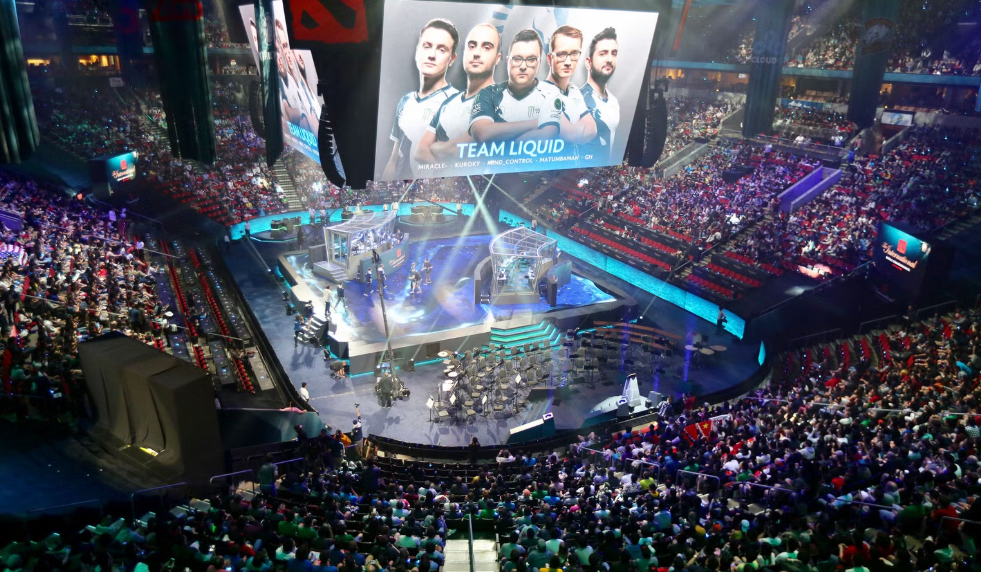
Few industries have grown as rapidly as competitive gaming, where events built around specific titles now draw viewership numbers rivaling traditional professional sports broadcasts across multiple platforms simultaneously. Understanding how these major tournaments actually operate, from qualification pathways through their culminating championship events, provides genuine insight into an entertainment industry that continues expanding its global cultural footprint. Fans wanting to follow tournament coverage can check the latest updates at https://db-bet.in/, where esports coverage stays current throughout the competitive calendar.
Understanding Esports Events as a Global Entertainment Industry
Esports events have transformed from niche gaming gatherings into genuinely massive productions, with premier tournaments drawing arena crowds numbering in the thousands alongside online viewership figures that now regularly surpass many traditional sporting broadcasts.
This growth reflects broader accessibility advantages too, since competitive gaming titles allow anyone with capable hardware to theoretically participate, removing many of the physical and financial barriers that traditionally limit entry into conventional professional sports.
Major publishers like Riot Games and Valve have consequently built increasingly sophisticated competitive infrastructures around their flagship titles, establishing structured regional leagues that ultimately feed toward prestigious annual championship events drawing genuinely global audiences.
Understanding LoL: League of Legends’ Competitive Foundation
LoL, the common abbreviation for League of Legends, anchors one of esports’ most extensive competitive ecosystems, built around regional professional leagues spanning Korea, China, Europe, the Americas, and numerous additional competitive regions worldwide.
This regional structure feeds into international tournaments throughout the calendar year, with the Mid-Season Invitational providing a crucial midyear checkpoint before the season’s ultimate culmination arrives through the annual World Championship each autumn.
Riot Games has continued refining this competitive structure too, recently introducing changes like “First Selection,” a new approach specifically designed to address side-selection balance issues that previous competitive seasons had identified as affecting genuine competitive fairness.
Breaking Down League of Legends Worlds 2026
League of legends competition reaches its annual peak through the World Championship, with the 2026 edition marking the tournament’s sixteenth iteration, running from October 15 through November 14 across three different United States host cities.
This particular tournament features nineteen total qualifying teams, expanded from previous years, with the competitive format incorporating a Play-In stage, followed by a Swiss-style group stage, before ultimately transitioning into single-elimination knockout rounds determining the eventual champion.
The tournament’s host cities reflect genuinely significant venue selections too, including Los Angeles for the Play-In stage, Allen, Texas for the Swiss and knockout rounds, before culminating with the Grand Final at Brooklyn’s Barclays Center, marking that arena’s first-ever League of Legends championship.
Understanding the Swiss Format’s Growing Importance
The Swiss-style group stage has become an increasingly central component within League of Legends’ competitive structure, pairing teams against opponents with similar win-loss records across multiple rounds before determining knockout stage qualification.
This format specifically addresses previous format limitations too, since traditional group stages sometimes produced dead matches once qualification became mathematically determined, while Swiss-style pairing maintains genuine competitive stakes throughout every single match.
Sixteen teams advance into this Swiss stage specifically, with the first eight teams reaching three total wins advancing toward the tournament’s single-elimination knockout bracket, creating a structure that rewards sustained consistency across multiple qualifying rounds.
T1’s Historic Championship Dynasty
Heading into the 2026 season, defending champions T1 entered as three-time consecutive World Champions, having cemented their legacy through this remarkable sustained championship run across recent competitive seasons within League of Legends’ demanding international competitive landscape.
This sustained dominance places T1 among the most statistically significant organizations in League of Legends esports history, reflecting genuine institutional excellence extending well beyond any single roster or individual championship-winning season.
Their continued pursuit of a fourth consecutive title heading into Worlds 2026 represented one of the tournament’s most significant storylines, testing whether this remarkable championship streak could continue against an increasingly competitive international field.
Understanding Dota 2’s Competitive Ecosystem
Dota 2 maintains its own distinct competitive structure centered around Valve’s community-driven tournament circuit, culminating annually in The International, the game’s most prestigious and financially significant championship event.
Unlike League of Legends’ more centrally structured regional league system, Dota 2’s competitive calendar incorporates various independently organized tournaments throughout the year, with teams accumulating qualification opportunities through both direct invitations and regional qualifying tournaments.
This structure reflects Valve’s generally more hands-off approach toward competitive organization compared to Riot Games’ more centralized league system, creating a genuinely distinct competitive ecosystem despite both titles sharing the broader multiplayer online battle arena genre classification.
The International 2026: Dota 2’s Premier Championship
The International 2026, also designated TI 15, will take place at Shanghai’s Oriental Sports Center from August 13 through 23, marking the tournament’s fifteenth anniversary and the second time this particular venue has hosted Dota 2’s championship event.
Sixteen total teams will compete for the tournament’s prestigious Aegis of Champions trophy, earning their qualification spots through a combination of direct invitations extended to established top organizations alongside teams that successfully navigate regional qualifying tournaments.
The competitive format specifically incorporates a Swiss-style group stage running from August 13 through 16, narrowing the sixteen-team field down to the final eight teams that advance toward the tournament’s culminating main event bracket.
Understanding Prize Pools and Financial Stakes
The International has historically maintained genuinely massive prize pools compared to most other esports tournaments, funded significantly through in-game item sales that direct portions of community purchases specifically toward the tournament’s total prize distribution.
Recent tournament editions have seen this crowdfunding model produce some of esports’ largest-ever prize pools, with previous editions reaching well over thirty million dollars total, though this figure has fluctuated somewhat across different recent tournament years.
This financial structure distinguishes Dota 2’s premier tournament from many other esports championships too, since the community-funded prize pool model creates genuine fan investment beyond simply spectating, as purchasing tournament-related items directly contributes toward the eventual prize distribution.
Regional Qualification Pathways Across Both Titles
Both League of Legends and Dota 2 maintain structured regional qualification systems, though these pathways differ considerably in structure, reflecting each publisher’s distinct philosophy regarding competitive organization and regional league development.
League of Legends’ system relies heavily on established regional professional leagues throughout an entire competitive season, while Dota 2’s approach incorporates more concentrated qualifying tournament windows specifically preceding each major championship event throughout the year.
These differing structures create genuinely distinct competitive rhythms too, since League of Legends players compete within sustained regional league seasons, while Dota 2’s more tournament-focused structure creates a somewhat different competitive calendar rhythm throughout the broader year.
The Growing Cultural and Commercial Significance of Major Events
Both League of Legends Worlds and The International have evolved into genuinely significant cultural events extending considerably beyond their core dedicated player bases, drawing mainstream media attention and substantial commercial sponsorship investment.
This growth reflects broader esports industry maturation too, with viewership figures for these premier events now regularly competing against major traditional sporting broadcasts, reflecting genuine mainstream entertainment relevance beyond simple niche gaming interest.
Venue selections for these major tournaments increasingly reflect this mainstream significance as well, with League of Legends Worlds 2026 utilizing prestigious arenas like Barclays Center that have previously hosted major traditional sporting and entertainment events.
Why Understanding This Ecosystem Enhances Fan Engagement
Genuinely understanding how these different competitive structures operate, from regional qualification through each tournament’s specific championship format, considerably enhances viewing experience for fans following either title’s competitive scene throughout an entire season.
This knowledge becomes particularly valuable when following major tournaments specifically, since understanding qualification stakes and format nuances reveals considerably more strategic depth than simply watching isolated matches without broader competitive context.
Whatever specific title initially draws a new fan’s interest, understanding esports’ broader competitive infrastructure provides genuinely valuable foundation for appreciating how this rapidly growing entertainment industry continues building increasingly sophisticated and commercially significant championship events.
