

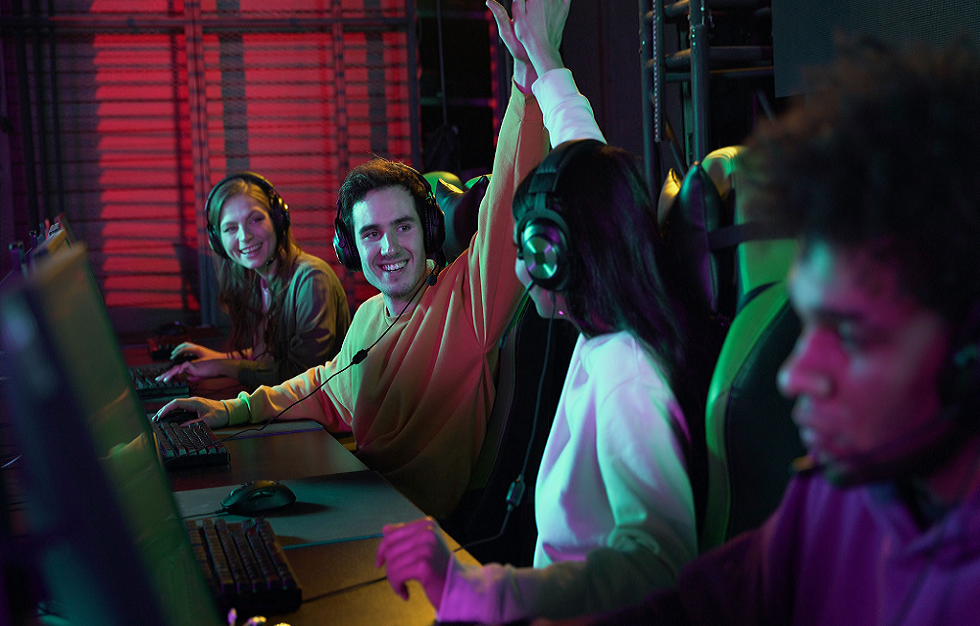
Online slot bet kecil has become a defining feature of modern digital culture. Millions of people now use computers, consoles, and smartphones to play games with friends, compete against strangers, and explore virtual environments. The industry has grown far beyond traditional video games, creating communities, professional competitions, streaming careers, and new forms of digital interaction.
The rapid development of internet connectivity and gaming technology has made online experiences faster and more immersive. Players no longer need to be in the same room to enjoy a game together. A stable internet connection can connect people across continents within seconds.
Understanding Online Gaming
Online gaming refers to video games that use an internet connection to provide multiplayer interaction or online features. Depending on the title, players may compete against one another, cooperate with teammates, communicate through voice chat, or explore shared virtual environments.
Some games focus entirely on online multiplayer, while others combine single-player campaigns with online modes. This flexibility has helped online gaming attract a wide range of audiences.
The Development of Multiplayer Experiences
The earliest online multiplayer games were relatively simple compared with today’s titles. Limited internet speeds and hardware capabilities restricted the number of players and the complexity of online environments.
Over time, technological improvements allowed developers to build persistent worlds, competitive matchmaking systems, and large multiplayer battles. Modern servers can support huge communities while delivering frequent updates and new content.
This evolution has made online games more dynamic and long-lasting.
The Role of Internet Connectivity
Reliable internet access is one of the foundations of modern online gaming. Fast connections allow players to exchange game data quickly and reduce delays during real-time matches.
Latency, often called ping, can have a major impact on competitive games. Lower latency generally means that actions are communicated more quickly between the player’s device and the game server.
The expansion of high-speed broadband and mobile networks has therefore contributed significantly to the growth of online gaming.
Popular Online Gaming Genres
Online gaming includes numerous genres designed for different preferences.
Action Games
Action games often require quick reactions and precise controls. Players may compete in fast-paced matches or complete objectives as a team.
Strategy Games
Strategy titles focus on planning, resource management, and decision-making. Players must often think several steps ahead to succeed.
Role-Playing Games
Online role-playing games allow users to develop characters, complete missions, collect equipment, and interact with other players in expansive worlds.
Sports and Racing Games
These games allow players to compete in digital versions of popular sports and racing events against opponents from around the world.
Survival Games
Survival games usually challenge players to collect resources, build shelters, manage equipment, and survive dangerous environments while competing or cooperating with others.
The Social Power of Gaming
Online games have developed into social spaces where people communicate and build relationships. Team members can coordinate strategies through voice or text communication while working toward common goals.
Gaming can also provide opportunities to meet people with similar interests. Online communities often continue their conversations outside the games through social platforms and discussion groups.
For some players, these communities become an important part of their overall gaming experience.
Online Gaming and Friendships
Distance is less of a barrier when people play online. Friends who live in different cities or countries can still meet regularly inside a virtual environment.
Cooperative games can provide shared experiences that encourage communication and teamwork. Completing difficult challenges together can create memorable experiences and strengthen friendships.
The Growth of Professional Gaming
Competitive gaming has developed into a professional field known as esports. Skilled players can join teams, participate in tournaments, and compete for significant prizes.
Professional gaming requires dedication and practice. Players often study game mechanics, review matches, improve communication, and develop specific strategies.
Esports has also created supporting careers for coaches, commentators, analysts, event organizers, and content creators.
Streaming and the Gaming Industry
Streaming platforms have changed the relationship between gamers and audiences. Players can broadcast their sessions live while viewers watch and communicate through chat.
Successful streamers may develop large communities around their personalities and gaming styles. Some specialize in competitive gameplay, while others focus on entertainment or educational content.
Streaming has therefore become an important part of the broader online gaming economy.
The Influence of Mobile Devices
Mobile gaming has brought online experiences to an enormous audience. Smartphones are widely available and do not require users to purchase specialized gaming hardware.
Players can enjoy multiplayer games during short breaks or longer sessions at home. Developers have also optimized many games for touch controls and mobile internet connections.
As smartphone technology improves, mobile games continue to become more sophisticated.
Free-to-Play Gaming
The free-to-play model has helped online games reach large audiences. Users can download many games without paying an initial purchase price.
Developers may earn money through optional purchases such as cosmetic items, character customization, expansions, and seasonal content.
Although this model can make games accessible, players should manage their spending carefully and understand that optional purchases can add up over time.
Educational and Cognitive Aspects
Certain online games can encourage problem-solving and strategic thinking. Players may need to analyze situations, identify patterns, remember information, and make decisions quickly.
Team-based games can also require communication and coordination. However, the value of these experiences depends on the type of game and how much time a person spends playing.
Gaming should complement rather than replace education, physical activity, and real-world social interaction.
Challenges of Excessive Gaming
Online gaming can become unhealthy when it takes up too much time. Long gaming sessions may interfere with sleep, exercise, studies, work, or family responsibilities.
Players can reduce these risks by taking regular breaks and maintaining a structured routine. Setting limits can make it easier to enjoy gaming without allowing it to dominate daily life.
Online Safety
Safety is another important consideration. Players should protect their accounts with strong passwords and avoid sharing personal information with strangers.
Online games can sometimes expose users to scams, harassment, or inappropriate communication. Reporting harmful behavior and using privacy controls can help create a safer environment.
Parents should also be aware of the communication and purchasing features available in games used by younger players.
The Future of Online Gaming
The next generation of online gaming will likely be shaped by artificial intelligence, cloud computing, virtual reality, and faster networks.
Cloud gaming may allow users to access demanding games on a wider range of devices. Artificial intelligence could make virtual characters more intelligent and game environments more responsive.
Virtual reality may create even deeper social experiences by allowing players to interact within three-dimensional environments.
A Growing Digital Economy
Online gaming now supports a large ecosystem of businesses and professionals. Developers create games, publishers distribute them, streamers produce content, esports organizations manage competitions, and advertisers reach gaming audiences.
This expanding ecosystem demonstrates that gaming is no longer simply a recreational activity. It has become an important part of the digital economy.
Building a Positive Gaming Experience
A positive gaming experience depends on balance and responsible behavior. Players should choose games that suit their interests, maintain healthy routines, and treat other members of the community respectfully.
Taking breaks, protecting personal information, and controlling spending can make online gaming safer and more enjoyable.
Conclusion
Online slot server thailand has transformed from a small area of the entertainment industry into a global digital phenomenon. It provides competitive challenges, social interaction, creative experiences, and opportunities for professional careers.
Technology will continue to shape how games are created and played. Faster networks, smarter artificial intelligence, cloud platforms, and immersive devices are likely to introduce new possibilities for players.
As online gaming continues to evolve, its most important strength will remain its ability to connect people through shared interactive experiences. With responsible use and a healthy balance, online gaming can remain an exciting and valuable part of modern entertainment.
