

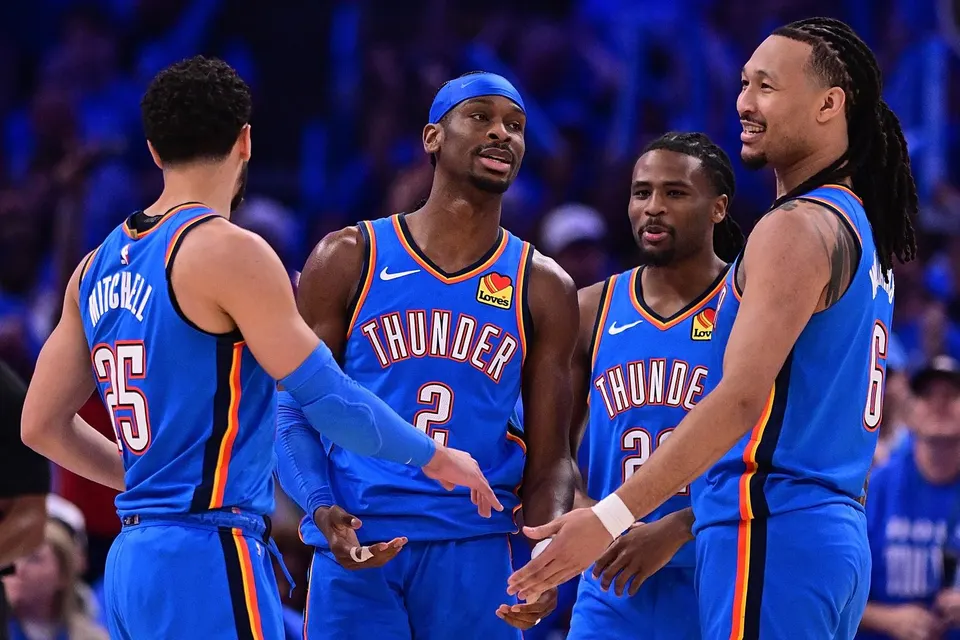
NBA franchise rebuilding stories follow recognizable patterns — the talent accumulation phase, the competitive emergence, and eventually the championship contention that successful rebuilds deliver. The oklahoma city thunder have compressed this trajectory with unusual speed, producing a team whose current competitive quality represents not just organizational success but the most compelling young championship contender in professional basketball. Understanding what OKC has built, where they stand competitively, and what championship ambitions are realistically supported by their current roster requires engaging with both the specific talent assembled and the organizational philosophy that assembled it. Fans following NBA action with dedicated markets can find comprehensive coverage at dbbetonline.com.
How Oklahoma City Built This Roster
The oklahoma city thunder rebuild began from a position that most franchises would have considered crisis — the departure of established stars whose replacements were unproven draft picks whose collective development would determine whether the organization’s patient rebuilding philosophy produced genuine championship contention or merely respectable mediocrity.
Sam Presti’s general manager tenure has been the consistent organizational thread whose decision-making quality the current roster validates more completely than any single draft selection or trade could independently confirm. The specific approach — accumulating draft capital through trade transactions that converted present competitive relevance for future asset depth, then deploying that capital through draft selections whose development the organization invested in comprehensively — reflects rebuilding philosophy executed with unusual consistency across multiple years of competitive patience.
The specific sequence of draft selections that produced the current core — Shai Gilgeous-Alexander acquired through trade, Chet Holmgren selected first overall, Jalen Williams chosen with a mid-first-round pick whose value the selection retrospectively validated — represents the organizational evaluation quality whose consistent accuracy across multiple draft classes creates genuine competitive advantages that less analytically sophisticated organizations cannot replicate regardless of the draft positioning they acquire.
Shai Gilgeous-Alexander: The Franchise Cornerstone
Shai Gilgeous-Alexander’s development from the promising young guard acquired from the Clippers in the Paul George trade into a genuine MVP-caliber performer represents the specific player development success story that rebuilding organizations require as their cornerstone to sustain everything else built around it.
His scoring — the specific combination of crafty finishing around the basket, step-back mid-range shooting that creates clean looks from positions that defensive schemes struggle to consistently cover, and free throw generation whose rate reflects the specific contact-drawing ability that defenders cannot neutralize through conventional positioning — creates offensive production whose efficiency alongside its volume places him among the NBA’s elite offensive performers.
The defensive contribution — his length, lateral quickness, and the specific engagement that elite two-way players maintain on the less glamorous end — provides the completeness that MVP evaluations reward beyond offensive production alone. A player who creates significant defensive value alongside elite offensive output delivers team impact that pure scorers whose defensive engagement is limited cannot match in the overall competitive contribution that winning basketball requires from franchise players.
OKC Thunder Standings: Competitive Positioning
OKC thunder standings within the Western Conference reflect a competitive reality whose speed of emergence surprised observers who anticipated a longer timeline between rebuilding and genuine contention. The Western Conference’s historical depth — concentrating the NBA’s most competitive teams within a conference whose playoff field represents genuinely elite basketball across multiple rounds — creates the specific testing environment that OKC’s standings position must be assessed against rather than simply compared to Eastern Conference equivalents whose competitive demands differ.
The Thunder’s specific standing within the Western playoff picture — whether they compete for top seeding that creates favorable bracket positioning or navigate the middle of the conference where playoff path quality varies significantly across seeding positions — reflects the competitive development whose progression each season documents more completely than any individual game result captures independently.
Regular season standings carry specific playoff implications that the Thunder’s organizational maturity in understanding and navigating — the specific decisions about load management, roster experimentation, and competitive intensity that playoff positioning stakes justify — reflects the organizational sophistication that transforms playoff-adjacent teams into genuine championship contenders through intelligent navigation of the full competitive calendar rather than simply accumulating wins without strategic awareness of what specific standings positions deliver.
Chet Holmgren: The Modern Big Man Revolution
Chet Holmgren’s development at Oklahoma City represents the specific expression of how the NBA’s positional evolution has created new archetypes whose competitive value traditional position frameworks cannot adequately capture. A seven-foot player whose shot-blocking defensive impact combines with genuine perimeter shooting capability and the specific ball handling that allows him to function within modern offensive systems — rather than being confined to the traditional big man role whose limitation modern basketball has comprehensively exposed — creates competitive advantages that conventional big man profiles cannot provide.
His specific defensive value — the rim protection that deters opponents from attacking the basket, the shot-blocking that creates defensive possessions from shots that lesser rim protectors allow to convert — combines with the offensive spacing that his shooting ability creates to produce a player whose presence simultaneously improves both offensive and defensive efficiency in ways that most NBA players affect only one dimension meaningfully.
The injury management that his physical profile requires — the specific attention to the physiological demands that his frame’s unusual dimensions create — reflects the specific development challenge whose successful navigation across his career’s early stages will determine whether his exceptional talent reaches its competitive ceiling or is limited by durability concerns that physical profiles create independently of organizational investment in their management.
Young Core Depth: Beyond the Stars
The Thunder’s competitive identity extends beyond their highest-profile performers into the roster depth that genuine championship contenders require when playoff competition’s intensity and opponent preparation creates the specific competitive challenges that star players alone cannot resolve across seven-game series.
Jalen Williams’s development alongside Gilgeous-Alexander — creating a two-star nucleus whose individual qualities complement rather than duplicate each other’s competitive contributions — provides the organizational depth that single-star rebuilds cannot access. The specific combination of Williams’s shooting and creation with Gilgeous-Alexander’s driving and finishing creates the offensive variety that defensive game plans cannot simultaneously neutralize, generating the sustained offensive efficiency that playoff basketball’s defensive intensity tests most severely.
The supporting cast whose development Presti’s organizational approach has cultivated — through draft selections, undrafted free agent investments, and the specific development programs that transform raw athletic talent into basketball-intelligent contributors — provides the competitive depth that distinguishes teams capable of deep playoff runs from those whose first-round exits reflect roster limitations that star-level performance cannot compensate for across four-to-seven game series against equally talented opponents.
Championship Timeline: When Does OKC Compete?
The specific question of when OKC’s current talent level translates into genuine championship contention requires honest assessment of where the roster’s competitive development currently positions the organization within the NBA’s championship landscape rather than the optimistic projections that fan enthusiasm and media narrative occasionally produce ahead of organizational reality.
The core’s youth — genuinely exceptional as a competitive asset that most championship contenders can identify as present only retrospectively — creates the specific circumstance where performance ceilings have not yet been fully tested across the sustained playoff pressure that championship runs require. Young players develop through playoff exposure in ways that regular season competition cannot fully replicate — the specific adjustments, the competitive resilience, and the tactical learning that experienced playoff opponents force upon younger teams create the accelerated development that championship contention eventually requires as prerequisite.
OKC’s championship timeline reflects this developmental reality — a team whose talent level already exceeds most playoff competitors in most NBA seasons, whose organizational depth and developmental philosophy have produced the foundational assets that sustained success requires, and whose specific championship window appears genuinely open across multiple years rather than representing the narrow contention window that older rosters with aging stars create.
What Makes OKC Different From Previous Thunder Eras
The current Thunder chapter carries specific organizational lessons from the Kevin Durant-Russell Westbrook era — the previous OKC championship contention period whose competitive quality and ultimate failure to deliver the title that the talent justified created the specific organizational learning that Presti’s subsequent decisions have reflected.
The specific difference — deeper roster construction rather than dependence on two transcendent talents surrounded by role players whose quality limits created playoff vulnerabilities that championship opponents exploited — reflects organizational philosophy evolution whose expression in current roster depth acknowledges what the previous contention window’s specific limitations revealed.
Whether the current Thunder generation delivers what the Durant-Westbrook era promised without producing is the competitive question whose answer the NBA’s next several years will provide — a question whose anticipation makes following OKC’s standings, results, and organizational decisions one of professional basketball’s most genuinely compelling ongoing narratives.
